 Pocket72
Evacuation with children, older people, disabled people and pets
Leave quickly with everyone and everything that matters
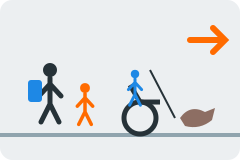
If the authorities ask you to evacuate, every minute counts. Those who need more time, such as children, older people, people with disabilities and animals, need a plan made in advance.
Before
- Prepare an emergency backpack for each person, including medicines, glasses, hearing-aid batteries and chargers for assistive devices.
- Write a card for each person with special needs: conditions, medicines, devices, contacts.
- Create a support network: neighbours or friends who can help and have a key.
- For children: a comforting object, snacks, nappies and a card with the parents' numbers in their pocket.
- For pets: carrier, lead, food, water, bowl, documents and a recent photo.
- Find out where the reception areas are and which ones accept animals.
- Take documents, cash, phone and charger, keys and medicines. Lock up, leave a note or message saying where you are going, and never drive through flooded roads: 15 cm of moving water can knock you down and 30 cm can carry a car away.
- Pick one contact outside your area that everyone calls or texts. Agree two meeting places: one near home, one outside the neighbourhood. Write numbers on paper.
- For babies: infant formula in single portions or ready-to-feed, bottles, and safe water (boiled and cooled) to prepare it; medicines for children as advised by your paediatrician.
During
- Leave as soon as you are told; do not wait for the last moment.
- Follow the routes indicated by the authorities, not shortcuts.
- If the authorities tell you to, or if you smell gas, switch off electricity and close the water and gas taps only if there is time and it is safe. Never relight the gas yourself: have it checked by a professional.
- Keep children close and give them a simple task to keep them calm.
- Help people with reduced mobility first and ask for help early if you need it.
- Keep animals on a lead or in a carrier.
After
- Register at the reception area so family can find you.
- Return home only when the authorities allow it.
Common mistakes
- Leaving medicines or devices behind.
- Leaving pets at home "for a few hours".
- Splitting up without agreeing where to meet.
Checklist
- Emergency backpack for each person
- Special-needs card
- Support network with a spare key
- Pet carrier and supplies
- Reception areas known
Sources
- Ready.gov – Evacuation
- Ready.gov – Kids
- Ready.gov – Older adults
- Ready.gov – People with disabilities
- Ready.gov – Pets and animals
- UK Government – Prepare
Pocket72 does not replace the authorities or the emergency number. In danger, call 112 (or your local number) and follow official instructions. No medical advice, no medicine doses and no wild plants: take a first-aid course.