 Pocket72
Gas leak and carbon monoxide
Smell of gas? Get out, no switches, call from outside
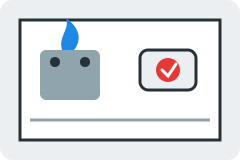
Natural gas has a strong added smell, but carbon monoxide (CO) has no smell, colour or taste. CO from heaters, stoves, boilers, generators and engines can poison a whole household, even in their sleep.
Before
- Fit a carbon monoxide alarm near the bedrooms and on each floor with fuel-burning appliances, and test it.
- Have boilers, stoves, chimneys and flues checked regularly by a qualified technician.
- Know where your gas shut-off valve is and how to close it.
- Never use a generator, barbecue, camping stove or gas heater indoors or in a garage: carbon monoxide kills without warning.
- Keep chimneys, flues and vents clear.
During
- Smell of gas: do not smoke, light flames, or touch switches, bells or electrical devices. Open doors and windows, close the gas valve if you can reach it at once, and leave.
- Leave the building and call the gas emergency number or 112 from outside, away from the building.
- Headache, dizziness, nausea or confusion while a heater, stove or generator is running: take everyone into fresh air, call 112 and do not go back in.
- If the CO alarm sounds: do not ignore it. Switch off the appliance if safe, open windows, get everyone outside, call 112 and do not go back in.
- After a gas leak, do not go back until a technician says so; only a technician turns the gas back on. For bottled gas (LPG), do not go into cellars or low rooms: LPG sinks.
After
- Do not go back in until the emergency services or a gas technician say it is safe.
- Have every appliance checked by a qualified technician before using it again.
- Anyone who was exposed to carbon monoxide should get medical advice, even if they feel better.
Common mistakes
- Heating a room with an oven, barbecue or camping stove.
- Running a generator indoors, in a garage or next to a window.
- Using switches or a lighter to look for a gas leak.
- Ignoring a headache that gets better when you go outside.
Checklist
- Carbon monoxide alarm fitted and tested
- Gas shut-off valve located
- Boiler and flues serviced
- Gas emergency number saved in the phone
Sources
- CDC – Carbon monoxide poisoning
- Contains public sector information licensed under the Open Government Licence v3.0.
- Ready.gov (FEMA, U.S. Government, public domain)
Pocket72 does not replace the authorities or the emergency number. In danger, call 112 (or your local number) and follow official instructions. No medical advice, no medicine doses and no wild plants: take a first-aid course.