 Pocket72
Volcanic eruption
Follow the orders: ash, evacuation or shelter
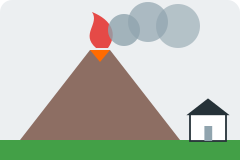
Eruptions can send out ash, gas and rock. Ash can travel far, irritate eyes and lungs and make roofs and roads dangerous. The official alert level and evacuation orders come first.
Before
- If you live near a volcano, learn the local alert level, the evacuation zones and the official plan.
- Prepare a kit with water, food, medicines and dust masks for several days.
- Agree on a family plan, including pets, and keep your documents ready.
During
- Listen to official alerts and follow evacuation or shelter orders. If you are told to evacuate, leave early.
- During ashfall stay indoors: close doors, windows and vents. If you must go out, use an FFP2/N95 mask and goggles if you have them; a damp cloth is only a last resort. Wear glasses instead of contact lenses.
- Avoid driving in heavy ash. Wet or thick ash is very heavy and can make a roof collapse, but do not climb up yourself while ash is still falling or without a harness and a mask: ask the authorities or professionals. If you must, wait until ashfall stops, wear a mask and goggles, and remove ash only from a safe position: falls from slippery roofs have killed many people.
After
- Stay indoors until the authorities say it is safe to go outside.
- Ash irritates eyes and lungs: people with breathing problems should take extra care.
- Return home only when you are allowed to, and avoid areas downwind and river valleys near the volcano.
Common mistakes
- Going closer to watch the eruption.
- Driving in heavy ashfall.
- Climbing onto the roof to clear ash while it is still falling or without safety gear.
- Ignoring an evacuation order because it looks calm.
Checklist
- Local alert level and evacuation zones known
- Dust masks and goggles in the kit
- Family plan agreed, pets included
- Documents and medicines ready
Sources
- Ready.gov – Volcanoes
- Protezione Civile – Rischio vulcanico
- Ready.gov (FEMA, U.S. Government, public domain)
Pocket72 does not replace the authorities or the emergency number. In danger, call 112 (or your local number) and follow official instructions. No medical advice, no medicine doses and no wild plants: take a first-aid course.